IEEE SPET 2025 Keynote Speakers Archives
Keynote Title: Rapid system prototype‐based physical simulation platforms for new power systems
Prof. Jinyu Wen
Keynote Abstract
The traditional power system dominated by synchronous generators is gradually evolving into a power system with high penetration of inverter‐based resources (IBRs). In light of these characteristics, current simulation technologies are inadequate and new requirements for the simulation platforms have been proposed. In response, the rapid system prototype (RSP)‐based physical simulation platforms, which include the digital simulator, the rapid prototype controller, and the rapid object‐controlled prototype. RSP addresses the time‐consuming and labour‐intensive shortcomings of traditional simulation techniques and meets the rapid evolution needs of the power system with high penetration of IBRs. Compared with existing simulation platforms, RSP is a more suitable platform for the physical simulation of power systems with high penetration of IBRs. Using the modular multilevel converter‐based high‐voltage direct current as a case study, a novel physical simulation platform for power systems based on RSP is constructed. Experimental results demonstrate that the RSP concept and technology can establish an enterprise‐level simulation environment and engineering practice platform.
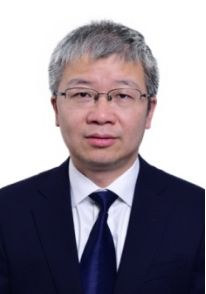
Biography
Jinyu Wen, Professor at Huazhong University of Science and Technology (HUST), Vice President of HUST, Director of the National Key Laboratory for Advanced Electromagnetic Technology, Director of SGO Laboratory. In recent years, he has been dedicated to addressing challenges such as large-scale renewable energy integration and power sector carbon neutrality through emerging technologies like energy storage and flexible DC transmission. He led the team to win the first National Science and Technology Award in the field of energy storage for new power systems. His proposed technologies, including heterogeneous series-connected converters and multi-degree-of-freedom control for overhead flexible DC transmission, have been applied in major projects such as the world's first ±800kV ultra-high-voltage flexible DC transmission project (Kunliulong) and the first hybrid ultra-high-voltage flexible DC transmission project (Baihetan-Jiangsu). Additionally, he proposed both combining deductive simulation and rapid prototyping simulation technologies which have been widely adopted by national and provincial power planning and operation agencies, as well as university research institutions. He was a Clarivate Highly Cited Researcher.
Keynote Title: Developing Digital Twins for Modern Power Systems
Dr. Yi Zhang
Keynote Abstract
This presentation highlights recent advancements in the development of digital twins for modern power systems. It explores the rationale behind selecting real-time electromagnetic transient (EMT) simulation as the foundational technology for power system digital twins. Both device-level and system-level digital twin architectures are introduced, showcasing their roles and integration. Real-world applications are summarized to demonstrate practical value, and future directions for research and development are outlined.
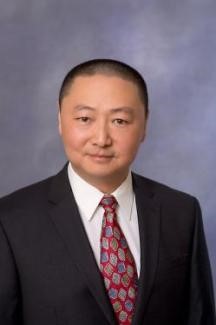
Biography
Dr. Yi Zhang (FIEEE, FCAE, FEIC, P. Eng.) joined RTDS Technologies Inc. in 2000, where he now serves as Vice-President R&D and Chief Technology Officer (CTO). He has over 30 years of experiences working in power system simulation and analysis. His expertise includes Real Time EMT Simulation, Voltage Stability and HVDC, etc. As a principal developer of the RTDS simulator, he developed many simulation models and algorithms in the past 25 years. He is an active member in CIGRE and IEEE. He also serves as an adjunct professor at the University of Manitoba Canada and Hunan University China, and an editor of IEEE Transactions on Power Delivery. Dr. Zhang is a Fellow of IEEE, a Fellow of Canadian Academy of Engineering, a Fellow of Engineering Institute of Canada, and a registered professional engineer in the province of Manitoba.
Keynote Title: Research and Application of AI for Science (AI4S) in Power System
Prof. Tianjiao Pu
Keynote Abstract
This report mainly introduces basic concepts of AI for Science (AI4S), exploration and application of AI4S in power system, and future prospects.
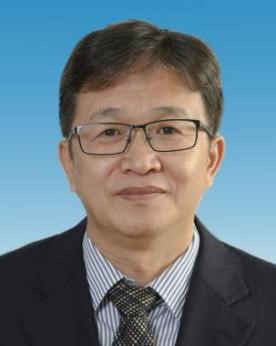
Biography
Tianjiao Pu, a professor-level senior engineer and doctoral supervisor, currently serves as a deputy chief engineer of China Electric Power Research Institute (CEPRI) and director of Artificial Intelligence (AI) Research Institute of CEPRI. He is a fellow of Chinese Society for Electrical Engineering (CSEE) and Institution of Engineering and Technology (IET). With long-term research experience in power AI and power system automation, he has led 6 national-level projects including National Key R&D Program, Smart Grid Joint Fund Key Project, and National 863 Program, along with over 20 provincial/ministerial-level scientific projects such as Beijing Natural Science Foundation Key Project. He holds multiple academic leadership positions, including deputy director of CSEE AI Technical Committee, deputy director of CSEE Digital Twin Application in Power Systems Technical Committee, deputy director of China Energy Research Society AI Committee, leader of State Grid Corporation's "AI Cognitive Decision-making Technology R&D Team for New Power Systems", and director of State Grid Corporation's "AI Technology and Application Laboratory for Power System". His achievements include 11 first prizes for scientific progress at provincial/ministerial, social organization, and State Grid levels, 145 published papers (115 indexed by SCI/EI), 61 authorized invention patents, 5 academic monographs, and participation in formulating/revising 6 industry, group, and enterprise standards.
Keynote Title: The role of power markets in energy transition - UK experience
Prof. Furong Li
Keynote Abstract
Her talk is concerned with role of market in improving transparency and collaboration for achieving supply efficiency and resilience as we decarbonise. She will highlight latest challenges in power market reform with increasing renewable energy, progress in UK making to achieve clean power 2030, and key lessons to learn and share.
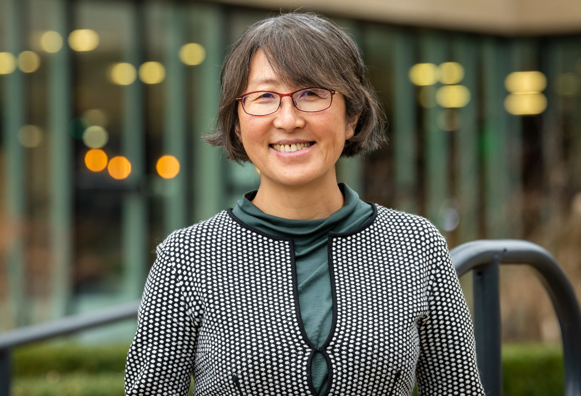
Biography
Furong is Research Chair for National Grid Electricity Distribution/Royal Academy of Engineering, co-Director for UK's National Centre for Energy Networks, and Deputy Director of Centre for Sustainable Energy System, University of Bath. Her research is concerned with fundamental development of new algorithms, economic theories and analysis tools and their application to smart energy systems, smart markets, and energy transition, such as DNO to DSO transition. She is an expert at UK Government's Independent Panel for Electricity Standards Review (2019-2020), and academy lead for UK Government commissioned feasibility study into Digital Spine for Energy Systems.
Keynote Title: Cyber-Physical Power Systems Digital Simulation and Security Analysis
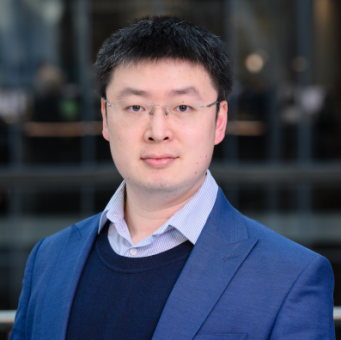
Prof. Xin Zhang
Keynote Abstract
Cyber-physical power systems evolve new digital technologies that use advanced information and computing methods to better monitor and control physical power systems. In this presentation, digital grid simulation facilities are developed that could potentially improve security and control of cyber-physical power systems. Transmission and microgrid digital co-simulation platforms are developed for fundamental integration of power and communications network simulators. OPAL-RT simulators are utilised in cyber-physical microgrid control, transmission analysis and dispatch. This project work is funded by UKRI Future Leaders Fellowship: "Digitalisation of Electrical Power and Energy Systems Operation", Royal Society International Exchanges Program with NSFC.
Biography
Prof. Xin Zhang is Professor in Control and Power Systems at University of Sheffield, United Kingdom. Prof. Zhang is Director of Sheffield Control and Power Systems Laboratory, managing a research team of 4 associate professors/lecturers, 7 postdoctoral research associates, and 6 doctoral students. Currently, Prof. Zhang holds UKRI Future Leaders Fellowship "Digitalisation of Electrical Power and Energy Systems Operation", and an EPSRC New Investigator Award "Grid Flexibility through Multiscale Modelling and Integration of Power Systems with Electrified Air Transport". His research experience covers power system operation and control, cyber-physical systems, and real-time digital grid simulation. Prof. Zhang has 8 years' industrial experience with National Grid ESO as GB Electricity System Operator, where he was professionally trained as a power system engineer in GB Electricity National Control Centre. His industrial expertise includes power system modelling and operational tools development for energy balancing and network control of GB power transmission system. Prof. Zhang has published over 40 high-quality journal papers on cyber-physical power system security and resilience in IEEE Transactions on Power Systems, IEEE Transactions on Smart Grid, IEEE Transactions on Sustainable Energy, IEEE Transactions on Information Forensics and Security, and IEEE Internet of Things Journal. He serves as an Associate Editor for IEEE Transactions on Smart Grid, IEEE Power Engineering Letters, Protection and Control of Modern Power Systems, Energy Conversion and Economics, and Cyber-Physical Energy Systems.