Key Technologies and Equipments of Low-Carbon and High-Reliability Urban Distribution SystemsKey Technologies and Equipments of Low-Carbon and High-Reliability Urban Distribution Systems
Session Chair(s) and Speakers:
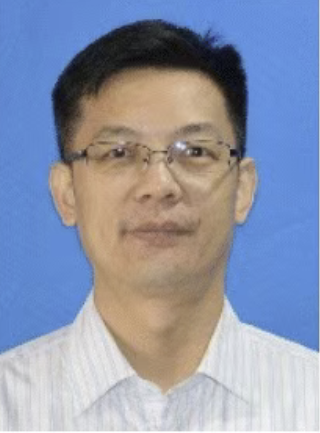
Keyan Liu
Keyan Liu, Doctoral Supervisor and Deputy Director of the Distribution Research Institute, China Electric Power Research Institute (CEPRI). He has long been engaged in tackling key technologies including distribution network modeling, data analysis and optimal grid-connected control of distributed generation, developing core software and hardware systems, and promoting major engineering applications, and has achieved a series of landmark research outcomes. He has presided over 1 sub-project of the National Science and Technology Major Project, 1 sub-project of the Integrated Program of the National Natural Science Foundation Joint Fund, 1 General Program of the National Natural Science Foundation, 2 sub-projects of the National Key R&D Program, and more than 20 science and technology projects issued by the headquarters of State Grid Corporation of China. He holds a total of 120 invention patents including 5 international invention patents, has published 3 monographs and 110 SCI/EI papers, and led the formulation of international standards such as IEEE 2749. He has received numerous honors including the IEEE SDM Outstanding Industrial Technical Contribution Award, IEEE CPS Outstanding Industrial Technical Contribution Award (only one awarded globally each year), and the State Grid Craftsman. He has also won more than 10 provincial and ministerial-level as well as industry first-class awards, such as the First Prize of China Electric Power Science and Technology Progress Award, the First Prize of China Electrotechnical Society Science and Technology Award, and the First Prize of Hubei Provincial Science and Technology Progress Award.
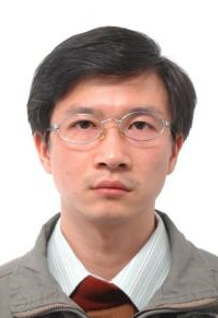
Fengzhang Luo
Fengzhang Luo is an Associate Professor in the Young Talents Program and a doctoral supervisor at Tianjin University. He has also served as a visiting scholar at Stanford University and the University of Tennessee. His research focuses on the analysis, assessment, optimal operation, and planning of intelligent power distribution systems. He has led or participated in dozens of research projects funded by the National Science and Technology Major Project, the National Key Research and Development Program of China, the National Natural Science Foundation of China, provincial and ministerial agencies, and industry partners. He has published more than 100 academic papers and holds over 50 granted invention patents. His honors include the Second Prize of the National Science and Technology Progress Award and eight provincial and ministerial science and technology awards, including the First Prize of the Tianjin Science and Technology Progress Award.
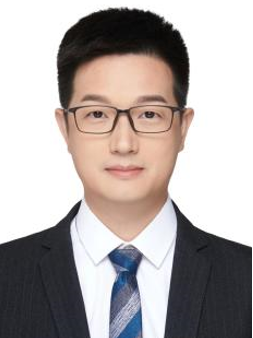
Hao Xiao
Hao Xiao, a professor and doctoral supervisor at the Institute of Electrical Engineering, Chinese Academy of Sciences, is a senior member of IEEE. He has long been engaged in research in the fields of power system optimization operation and control, as well as artificial intelligence applications in power systems. He has led and undertaken more than 10 national/provincial/ministerial projects, including the National Key Technology R&D Program of China for smart grid, and has published over 110 peer reviewed journal and conference papers, and granted 34 national invention patents. From 2024 to 2025, he was continuously selected as one of the Top 1% Highly Cited Researchers in China. Currently, he serves as an editorial board member/young editorial board member of journals such as Engineering, CSEE Journal of Power and Energy Systems, Protection and Control of Modern Power Systems, and IET Smart Energy Systems. He is also the executive director of the Power Grid Operation and Control Technology Subcommittee of IEEE PES China Region, and the executive director of the Grid-connected Energy Storage and Operation Control Technology Subcommittee. As the first contributor, he has received awards such as the Science and Technology Progress Award from the China Electrotechnical Society and the Youth Science and Technology Award from the China Renewable Energy Society.
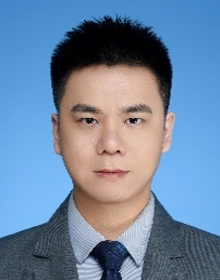
Jiayan Liu
Jiayan Liu, he has engaged in long-term research centers on the optimal operation of distribution networks. He has published over 40 high-level academic papers with more than 900 total citations and obtained 5 authorized invention patents. He presides over and takes part in a series of research projects covering National Science and Technology Major Projects, National Natural Science Foundation of China, Hunan Provincial Natural Science Foundation, and corporate science and technology projects entrusted by State Grid Corporation of China and China Southern Power Grid. He has compiled one undergraduate textbook, and several of his papers have been selected as CNKI High-PCSI Papers and Highly Cited Papers. He works as a peer reviewer for multiple authoritative international SCI journals, and has been awarded the Second Prize of China Electric Power Science and Technology Award.
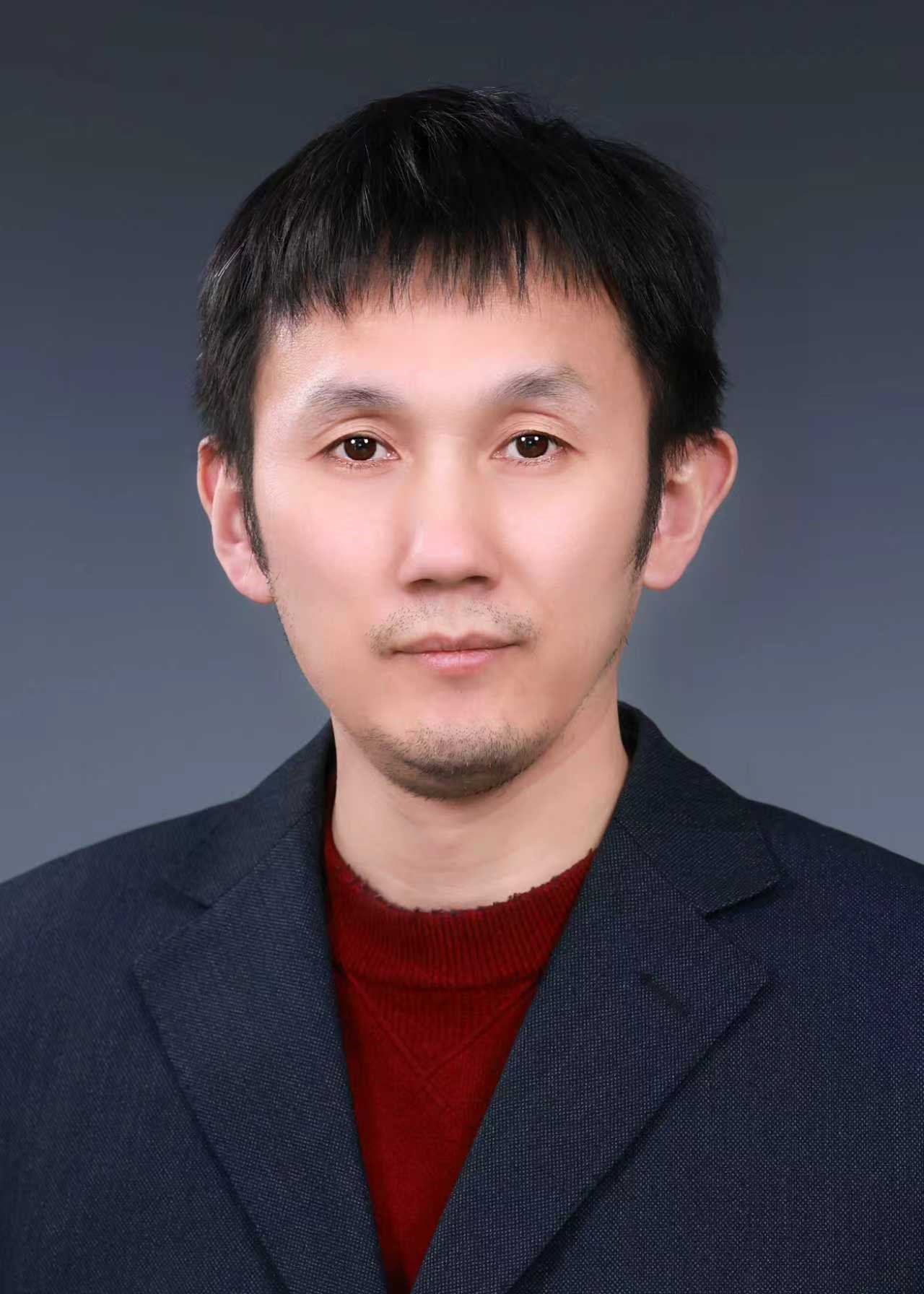
Weijie Dong
Dong Weijie, Senior Engineer, Associate Professor, and Master's Supervisor at Beijing University of Information Science and Technology. Main research directions: research and development work in active distribution network operation and analysis, distributed energy and microgrid modeling and simulation technology, new energy grid integration analysis, comprehensive energy system optimization configuration and operation analysis, distribution network fault diagnosis, warning and positioning, etc. As a key member, participated in one national key research plan project and one national natural science foundation key project, led 15 horizontal scientific research projects, and published 30 main papers. Served as a reviewer for several well-known journals such as Chinese Journal of Electrical Engineering, JCSEE, High Voltage Technology, China Electric Power, Energies, etc. He has won the 2nd prize of Hubei Province Science and Technology Progress Award, the 1st prize of China Simulation Technology Invention Award, the 1stt and 2nd prizes of State Grid Corporation of China Science and Technology Progress Award, and the 2nd prize of China Power Industry Science and Technology Progress Award.
Session Abstract
Driven by the national dual carbon goals, urban distribution systems serve as core carriers of terminal energy supply, undertaking multiple vital tasks such as carbon emission reduction, highly dependable power delivery, flexible operational modes and premium energy service. The large-scale grid connection of distributed photovoltaic generation, energy storage facilities and electric vehicle loads has intensified the spatiotemporal fluctuations of power sources and loads, posing mounting challenges to carbon emission governance and power supply assurance amid extreme operating conditions. Traditional distribution architectures, planning methodologies, equipment systems and regulation strategies fail to accommodate the development requirements of new power systems. Centered on the theme ‘Key Technologies and Equipment of Low-Carbon and High-Reliability Urban Distribution Systems’, this special forum establishes four core research topics oriented toward carbon abatement, efficiency enhancement and resilient power provision. Discussions will cover electricity-carbon collaborative planning and zoned low-carbon grid layout technologies tailored to city-wide carbon reduction targets; the development, topological adaptation and integrated engineering application of reusable, high-performance intelligent distribution equipment applicable to urban blocks, industrial parks and other differentiated scenarios; flexible grid-forming control, cross-regional coordinated regulation and high-quality supply-demand interaction enabling technologies for power-electronics-intensive urban distribution networks; as well as multi-layer active fault prevention, rapid fault isolation and self-recovery, and grid resilience optimization technologies under complex and disaster-prone operating conditions. This forum assembles scholars and specialists from universities and power grid corporations to integrate theoretical exploration, technological innovation, equipment commercialization and practical engineering deployment. It lays solid theoretical and technical foundations for developing a new-generation urban distribution system characterized by low carbon intensity, safe controllability, outstanding resilience and high flexibility, thereby advancing the green and low-carbon transformation of urban energy systems and guaranteeing premium and reliable power supply services.