Efficient Operation and Stability Control of Micro-Energy System Clusters with Large-Scale Renewable Energy
Session Chair(s) and Speakers:
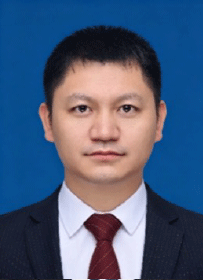
Lei Shang
Lei Shang is a Associate Professor, Ph.D. Supervisor with the School of Electrical Engineering and Automation, Wuhan University, China. Dr. He is currently an Associate Professor and Ph.D. Supervisor at Wuhan University. He serves as a standard development expert of IEC TC 8/SC 8A and Secretary-General of IEEE PES Wuhan Chapter. His research focuses on grid-connected control of renewable energy, novel distribution systems, and microgrid operation and control. He has published over 30 academic papers, holds more than 10 invention patents, and participated in the development of 4 IEC international standards. He has presided over/participated in more than 10 research projects, and received awards including the First Prize of Hubei Natural Science Award, the First/Second Prize and the Young Scientist Award from the China Electrotechnical Society.
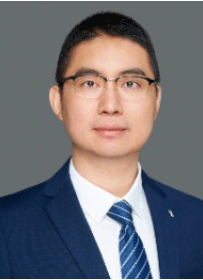
Haoran Ji
Haoran Ji, is currently a Full Professor and Doctoral Supervisor with the School of Electrical and Information Engineering, Tianjin University, China. He is a recipient of the national "Postdoctoral Innovative Talent Support Program" and serves as the Deputy Director of the Tianjin Distribution System Planning and Automation Technology Promotion Center. He has published 6 papers indexed as Global Top 1% ESI Highly Cited Papers and Nature Portfolio journals, authored 1 English monograph, and holds over 50 authorized invention patents.
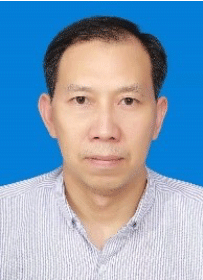
Shu Jie
Shu Jie is currently a Full Research Professor and Doctoral Supervisor with the Guangzhou Institute of Energy Conversion, Chinese Academy of Sciences (GIEC), where he also serves as the Director of the Distributed Generation and Microgrid Research Department. He has led more than 10 national and provincial-level research projects and successfully established China's first MW-class island microgrid demonstration project. To date, he has published over 70 academic papers, filed more than 90 invention patents, and received the Second Prize of the Guangdong Provincial Science and Technology Progress Award.
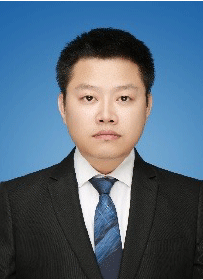
Zhou Leming
Zhou Leming is a Professor and Ph.D. Supervisor at Hunan University. He currently serves as the Director of the Hunan Provincial Key Laboratory of Electrical Science and Technology. He was selected in the top 2% of the world's most influential scientists in the field of Electrical and Electronic Engineering for both 2022 and 2023. He has received seven major science and technology awards, including the National Science and Technology Progress Award (Second Class) and several provincial/ministerial-level awards.

Liu Tong
Liu Tong is a Professor-level Senior Engineer, Deputy Director of Distribution Technology Research Department, China Southern Power Grid Electric Power Research Institute Co., Ltd. As the project principal investigator, he has led a national 863 key R&D program project, and 3 key scientific and technological projects of China Southern Power Grid. He has received 5 provincial/ministerial-level science and technology awards.

He Lili
He Lili received her B.S. in Electronic Information Engineering and Ph.D. in Electrical Engineering from Hunan University in 2016 and 2022, respectively. She currently works as a lecturer at the College of Electrical and Information Engineering, Hunan University. Her research focuses on high-precision modeling, simulation and intelligent applications of power-electronized power systems. She was selected for the 2025 Furong Young Talent Program for Scientific and Technological Innovation. She has undertaken 12 national, provincial and industrial research projects. She has published over ten SCI papers and been granted more than 20 invention patents, and participated in compiling one national standard. She has won the First Prize of Science and Technology Progress awarded by China Electrotechnical Society and the First Prize of Technological Invention of China Machinery Industry.
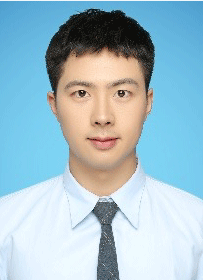
Guo Qi
Guo Qi, Ph.D. in Engineering, Distinguished Research Fellow at the College of Electrical and Information Engineering, Hunan University, and a key young member of the National Engineering Research Center for Electric Energy Conversion and Control. He has been selected for the Young Talent Support Project of CAST, Special Postdoctoral Program of China and CNKI Most Influential Scholars. He serves as committee member of academic societies, journal editorial board member and session chair of international conferences. His research covers grid-connected converter control, distributed resource management and power quality optimization. In the past five years, he has led 14 national and provincial projects, published 51 SCI/EI papers including 2 ESI Highly Cited Papers, obtained 73 patents and 3 monographs, and received multiple industrial and provincial science and technology awards.
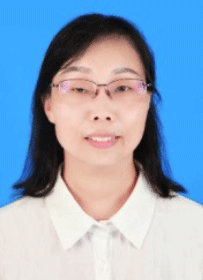
Cui Xue
Cui Xue, Ph.D. in Engineering, is an Associate Professor at the School of Electrical Engineering and Automation, Wuhan University. She received her B.S. and M.S. degrees in Technical Economics from Wuhan University of Hydraulic and Electric Engineering in 1996 and 1999, respectively, and her Ph.D. degree in Power System and Its Automation from Wuhan University in 2009, after which she joined the faculty of Wuhan University. Her research interests include electricity markets, planning and operation of integrated energy systems, power economics and management, and power quality analysis and control. She has presided over nearly 30 research projects, including projects funded by the National Natural Science Foundation of China and commissioned by power grid enterprises. She has published numerous papers in core academic journals and received multiple teaching and research awards, including the First Prize in the Young Teacher Teaching Competition of Wuhan University.
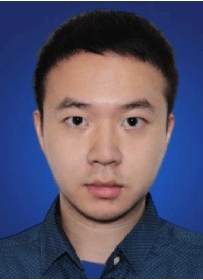
Chen Lei
Chen Lei is an Associate Professor and doctoral supervisor at Wuhan University. He received his B.E. and Ph.D. degrees from Huazhong University of Science and Technology in 2004 and 2010, respectively, and conducted postdoctoral research there afterward. He joined Wuhan University in 2013 and was a visiting scholar at Nanyang Technological University, Singapore, from 2016 to 2017. He serves as an editor for several SCI/EI journals and has held key positions in multiple IEEE conferences. He has presided over more than ten research projects including the National Natural Science Foundation of China, published over 100 SCI papers, and received numerous IEEE Best Paper Awards and the Hubei Provincial Science and Technology Progress Award.
Session Abstract
With the deepening implementation of China's "dual carbon" strategy and the comprehensive advancement of rural revitalization, the clean and efficient utilization of rural energy has become a critical component in building a modern energy system. However, weak energy infrastructure, low energy efficiency, and limited operational flexibility of distributed energy systems in rural areas continue to impede the rural energy transition. This special session focuses on the core scientific questions and key technological challenges of smart rural distributed energy systems, centered on the fundamental proposition of "morphological evolution characteristics and dynamic interaction mechanisms of rural distributed smart energy systems." Four key technical areas will be addressed: (1) Collaborative planning of multi-zone weakly-coupled high-penetration distributed energy systems; (2) Digital intelligence-enabled quality and efficiency improvement for heterogeneous rural multi-energy utilization; (3) Flexible operation and control of distributed energy systems under complex multi-scale energy flow interactions; (4) Safety protection and autonomous resilience against cascading faults in multi-energy coupled systems. This session aims to bring together cutting-edge research and engineering practices in rural energy from home and abroad, fostering theoretical innovations and technological breakthroughs in smart rural distributed energy systems, and contributing to the development of beautiful rural areas and green low-carbon transition.