Large Language Models, Edge Intelligence, and Optimization for Distributed Flexible Resources
Session Chair(s) and Speakers:
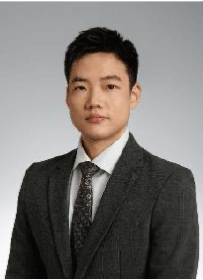
Song Ke
Song Ke received the B.S. degree from North China Electric Power University, Baoding, in 2019, and the Ph.D. degree from Wuhan University in 2024. Dr. Ke is currently a Postdoctoral Fellow in the Department of Electrical and Electronic Engineering and the Research Centre for Grid Modernization at The Hong Kong Polytechnic University. His research interests include coordinated V2G supportive frequency response control, physics-informed optimization and scheduling of heterogeneous human-centric energy terminals, as well as interdisciplinary applications of multi-agent reinforcement learning and large language models in human-centric energy management systems. He has published 20 SCI/EI-indexed papers as the first or corresponding author and has participated in more than 10 national, Hong Kong, and industrial collaborative research projects. He also serves as a reviewer for more than 10 international journals, including IEEE TSG, IEEE TTE, and IEEE TII. He has received more than 10 academic honors, including the Best Paper Award at IEEE CIEEC, the Best Paper Award from Energy Conversion and Economics, and Outstanding Reviewer Awards from Automation of Electric Power Systems and Power System Technology.
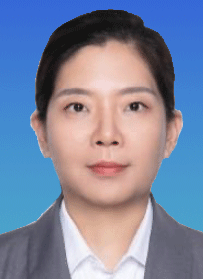
Hui Hou
Dr Hui Hou received the B.S. degree from Wuhan University, Wuhan, in 2003, and the Ph.D. degree from the Huazhong University of Science and Technology, Wuhan, in 2009. During 2015-2016, she was a visiting scholar at the University of Sydney. She is currently associate professor and Ph.D supervisor, as well as the Department Head of Electrical Engineering,School of Automation, Wuhan University of Technology. Her research interests include risk assessment of power system, energy internet, electric vehicles, etc. She has been AE or Young professional AE for a number of journals such as PCMP (Protection and Control of Modern Power Systems), Electric Power Construction, etc. She has been nominated as World's Top 2% Scientists by Stanford and Elsevier in 2024.
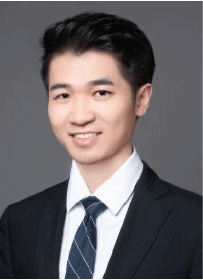
Chen Siyuan
Chen Siyuan received his Master's and Doctoral degrees from Wuhan University in 2018 and 2022 respectively. Since 2023, he has been engaged in postdoctoral research at Wuhan University. His research focuses on the application of artificial intelligence technologies in the operation and control of power systems. He has presided over sub-projects of the National Key R&D Program, major special projects for smart grids, and scientific and technological projects of China Southern Power Grid. In the past five years, he has published papers in many authoritative journals including IEEE Transactions on Power Systems, Applied Energy and CSEE Journal of Power and Energy Systems.
Session Abstract
The accelerating transition toward modern power grids demands a paradigm shift in the management of distributed flexible resources, including electric vehicles (EVs), and distributed energy storage. Efficient coordination of these heterogeneous resources remains challenging due to spatial-temporal uncertainties, multi-physics couplings, and complex interactions with human behaviors.
This session focuses on the emerging convergence of Large Language Models (LLMs), edge intelligence, and advanced optimization technologies for next-generation intelligent energy systems. In particular, the session explores how semantic reasoning, autonomous AI agents, and distributed intelligence can transform passive flexible loads into adaptive, grid-supportive, and human-aware edge energy agents.
The session serves as a high-level forum for presenting innovative methodologies spanning AI-enhanced modeling, distributed optimization and control, edge intelligence, and human-centric energy interaction. Special emphasis will be placed on integrating LLMs with power system operation for semantic-aware demand perception, intelligent human-machine interaction, autonomous decision-making, and scalable coordination of distributed flexible resources.
Topics of interest include, but are not limited to:
- LLM-driven energy applications
- AI and edge intelligence for energy systems
- Distributed optimization and cooperative control
- Flexible resource modeling and behavioral characterization
- Engineering practices and real-world deployments of intelligent demand response