Zero-Carbon Parks: Power System Planning, Operation, and Flexible Resource Coordination
Session Chair(s) and Speakers:
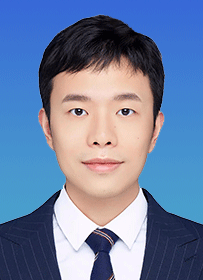
Mingyu Yan
Mingyu Yan is with the School of Electrical and Electronic Engineering, Huazhong University of Science and Technology, Wuhan, China. His research interests include power system operation and planning, low-carbon energy systems, micro-energy networks, electric-vehicle integration, demand-side flexibility, renewable-energy accommodation, and multi-time-scale optimization scheduling. Recent research addresses the aggregation of electric vehicles into virtual energy-storage resources and coordinated day-ahead and intra-day scheduling for micro-energy networks under renewable-energy uncertainty. His expertise is closely aligned with zero-carbon park power-system planning and operation, distribution-grid interaction, source-grid-load-storage coordination, and flexible resource dispatch.
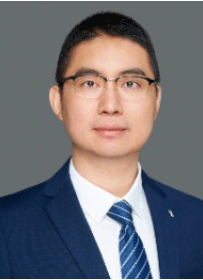
Haoran Ji
Dr. Haoran Ji received the B.S. and Ph.D. degrees in electrical engineering from Tianjin University, Tianjin, China, in 2014 and 2019, respectively. From 2019 to 2021, he was a Postdoctoral Research with Tianjin University. He is currently a Professor with School of Electrical and Information Engineering at Tianjin University, China. His research interests include distributed generation systems and optimal operation of distribution networks. He was supported by China National Postdoctoral Program for Innovative Talents. He is currently a senior member of IEEE and CSEE, and a member of CIGRE Chinese National Comittee SC C1 Study Committee. He is a young editorial board member of Advances in Applied Energy and eScience. He also serves as associate editor of the Journal of Modern Power Systems and Clean Energy (MPCE), Protection and Control of Modern Power Systems (PCMP) and iScience.
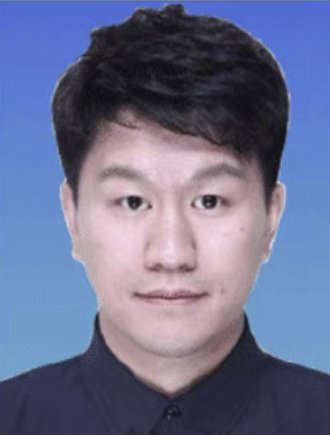
Bowen Zhou
Bowen Zhou received the Ph.D. degree from Queen's University Belfast, Belfast, UK, in 2016, in electrical engineering. He joined College of Information Science and Engineering, Northeastern University, Shenyang, China, where he is currently working as a professor. He is also the vice dean of School of Future Technologies, Northeastern University. His research interests include power system operation and control, vehicle to grid, virtual energy storage and demand response, intelligent control of industrial loads. He is the PI of 36 government and industry sponsored projects. He has published more than 90 SCI indexed papers and holds 45 patents, 7 software, and 7 standard. 8 papers that he authored or co-authored have won best paper awards. He has also received 4 first awards of provincial level science and technology advances award, and 3 golden awards of the international Inventions. He is a member of the Expert Committee of China Energy Society, a standing director or director of several IEEE PES China committees and subcommittees. He has served as a Editorial Board Member and Special Issue Guest Editors of several international and domestic journals, and the session chairs and TC/PC members for more than 10 IEEE, IET, CCDC international conferences.
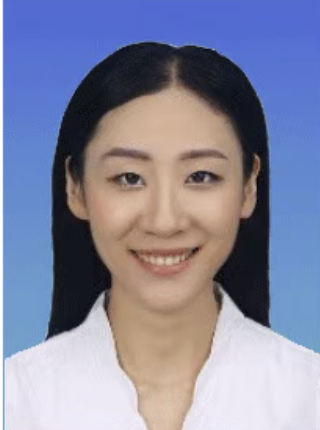
Shanshan Cai
Shanshan Cai is invited as a speaker from Huazhong University of Science and Technology. The proposed talk will discuss coordinated optimization and control of source-grid-load-storage resources in zero-carbon parks, supporting secure, economical, and low-carbon operation of park-level power systems.
Session Abstract
Zero-carbon parks provide an important application scenario for the construction of new-type power systems. This special topic papers section focuses on power-system-oriented planning, operation, control, and assessment methods for zero-carbon parks with high penetration of renewable energy, energy storage, electric vehicles, flexible industrial loads, and other demand-side resources. Topics of interest include park-level power system modeling, source-grid-load-storage coordination, distribution-grid interaction, renewable-energy accommodation, carbon-constrained optimal dispatch, flexible load aggregation, energy storage planning and operation, reliability and resilience assessment, power quality and security analysis, data-driven forecasting and optimization, and practical demonstrations of zero-carbon park power systems. The section aims to provide a forum for researchers, engineers, and practitioners to discuss technical challenges and recent advances in building safe, reliable, flexible, and low-carbon park power systems.