Key Technologies and Applications of Offshore-Coastal-Onshore AC/DC Interconnected Power Systems
Session Chair(s) and Speakers:

Liu Jian
Liu Jian is Professor-level Senior Engineer, Director of the Offshore Wind Power Technology Laboratory at State Grid Jiangsu Electric Power Research Institute, recipient of the Jiangsu Province "333" High-Level Talent Program (Level II), and Deputy Secretary-General of the Electric and Electromagnetic Quantity Measurement Equipment Technical Subcommittee under the National Technical Committee for Electrical Instruments and Meters.
He received his Ph.D. in Intelligent Monitoring and Control from Nanjing University of Aeronautics and Astronautics in 2010. He has worked successively at Nanjing Power Supply Company and State Grid Jiangsu Electric Power Research Institute, where he held positions including Director of the Science and Technology Department, Director of the Distribution Network Technology Center, and Director of the Offshore Wind Power Laboratory. He has been engaged in research on power distribution and utilization, grid-integration technologies for new energy, and electrical measurement technologies.
He was awarded the First Prize of Jiangsu Provincial Science and Technology Progress Award in 2021 (ranking 1st), and the First Prize of State Grid Science and Technology Progress Award in 2025 (ranking 1st). In the past five years, he has received 7 provincial/ministerial-level awards, including the First Prize of China Electric Power Science and Technology Progress Award and the China Patent Excellence Award. He has led one subject of the National Key R&D Program of China (ranking 1st) and undertaken over 10 national/provincial-level scientific research projects. He has been granted more than 70 invention patents and has contributed to 3 IEC/ITU international standards and 4 national standards.

Yaran Li
Yaran Li received the Ph.D. degree in electrical engineering from the University of New South Wales, Sydney, Australia, in 2021, the B.E. degree in electrical engineering from Southeast University, Nanjing, China, in 2017. She is currently with State Grid Jiangsu Electric Power Research Institute, dedicated on offshore wind connection and control. She also held industrial positions with Transgrid, Australia as a network planning engineer. She primarily supported the team in particular in the area of renewable generation integration in relation to adverse impacts due to lack of power system strength. Her research interests include microgrid control, renewable connection, and power system stability analysis.
She has been actively involved in international standardization activities since 2023. She convened the CIGRE working group C2.45 titled "Estimation, evaluation and provision of power system inertia in networks with a high share of renewable generation", participated in the IEC White Paper on "Zero carbon power system based primarily on renewable energy (Chinese version)", and joined IEC SC8C (Network management in interconnected electric power systems) WG4 (Power system resilience) and WG8 (power system inertia) as the registered expert.

Lingling Huang
Dr Lingling Huang is a Professor and Doctoral Supervisor at Shanghai University of Electric Power. She received her B.Eng. degree from Xi'an Jiaotong University in 2004, her M.Eng. degree in Electrical Power Engineering from Zhejiang University in 2006, and her Ph.D. degree from Shanghai University in 2018. Her research focuses on offshore wind power grid integration planning, operation and maintenance optimization, and wind farm wake control—areas in which she has established a sustained and impactful record. She serves as Secretary of the IEEE PES Shanghai Chapter Women's Engineering Committee and as a Member of the IEEE PES (China) Subcommittee on Offshore Wind Power Grid Integration and Accommodation. She has led numerous high-level research initiatives as Principal Investigator, including projects funded by the National Natural Science Foundation of China (General and Youth Programs), the National Key R&D Program "Smart Grid" Major Project, and the State Grid Corporation of China. Her contributions have been recognized with multiple national and industrial awards, including the Second-Class National Science and Technology Progress Award and the First-Class Science and Technology Progress Award of the Chinese Society for Electrical Engineering (CSEE).

Guoteng Wang
Wang Guoteng is a researcher at the College of Electrical Engineering, Zhejiang University. His research focuses on HVDC transmission technology, power system stability analysis and control. In recent years, he has led several National Natural Science Foundation of China projects, and enterprise science and technology projects. He has been selected for the China Association for Science and Technology's Young Talent Support Project and the National Postdoctoral Researcher Support Program. He has published/accepted more than 10 SCI journal papers as the first author. He serves as a youth editorial board member for the international journals "Clean Energy Science and Technology (CEST)" and "Energy Conversion and Economics." He has won one second prize of China Electric Power Innovation Award (ranked 2nd) and one third prize of China Electric Power Science and Technology Progress Award (ranked 5th).
Dong Liu
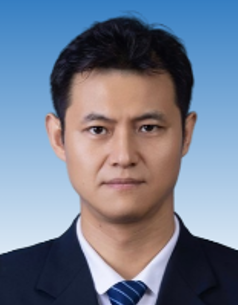
Liu Dong, Professorate Senior Engineer and Doctoral Supervisor, graduated from China Electric Power Research Institute (CEPRI).He has long been engaged in research on high-power power electronic devices, the application of DC transmission technologies and equipment in power systems, as well as digital-physical simulation technologies.He has served as the principal investigator for 1 research project under the National 2030 Major Science and Technology Program, and for 6 scientific and technological projects sponsored by Beijing Municipal Government and State Grid Corporation of China.He has published 2 monographs and led the formulation of 1 national standard. As the first author, he has released 3 SCI papers and 7 EI papers.
He is a member of the Offshore Wind Power Technical Committee and Editorial Committee of the China Society for Electrical Engineering, as well as a member of CIGRE Working Groups B4.74 and B4.79. He also acts as an industrial postgraduate supervisor for Shandong University and North China Electric Power University.

Gen Li
Gen Li received the Ph.D. degree as a Marie Curie Early Stage Research Fellow from Cardiff University in the U.K., in 2018. He has been a Professor at North China Electric Power University, Beijing, China, since June 2025. Before that he was an Associate Professor at Technical University of Denmark, Denmark, from 2022 to 2025. He is a Chartered Engineer in the U.K., an Associate Editor of IEEE Trans. Power Del., IEEE Trans. Sustain. Energy and CSEE Journal of Power and Energy Systems and an Editorial Board Member of CIGRE ELECTRA. He is the Sectary of CIGRE JWG C1/B4.58. He received the CIGRE NGN Significant Contribution Award in 2024 and the First CIGRE Thesis Award in 2018.

Wenjia Zhang
With over ten years of experience in power grid planning and design, have participated in energy and electricity planning studies for Jiangsu during the 13th and 14th Five-Year Plans, accumulating extensive expertise in provincial AC/DC hybrid grid planning, offshore wind power transmission planning, and related fields. The research findings have supported the planning and construction of innovative projects such as the Yangzhou-Zhenjiang AC to DC conversion and the flexible power flow control project in Jiangsu.
Session Abstract
Offshore wind power is the key enabler for China's energy transition and reliable supply. The distribution of power sources and loads in China's coastal provincial power systems is inversely patterned. The coastal regions are abundant in wind power, yet they have limited connection points and insufficient consumption capacity. In addition, onshore transmission corridors are constrained, which poses significant challenges on transmitting offshore wind power across the coastal economic belt.
This special issue focuses on the delivery and consumption of large-scale offshore wind power. It investigates key technologies and engineering applications in areas such as integrated offshore and onshore system configuration, power converters, fault protection, and coordinated control and operation. The scope of submissions includes, but is not limited to: AC/DC grid planning for large-scale offshore wind power development, multi-port converters for multiple AC and DC voltage levels, fault clearance and protection for hybrid offshore-coastal-onshore systems, coordinated control and operation for offshore-coastal-onshore systems to enhance flexibilities, and case studies.
This special issue aims to provide a platform for experts and scholars in relevant fields to disseminate innovative technologies and on-site experiences. It anticipates to promote technological progress and industrial development for offshore-coastal-onshore AC/DC interconnected power systems, support the construction of new power systems, and facilitate the efficient growth of offshore wind power.