Coordinated Dispatch Control of Transmission, Distribution, and Micro-Grids for Smart Power and Energy Systems
Session Chair(s) and Speakers:
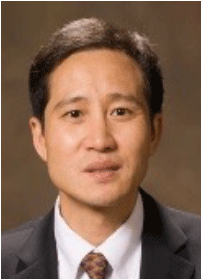
Wenzhong Gao
He has been engaged in research on renewable energy, distributed power generation, smart microgrids, coordinated regulation of transmission-, distribution-, micro- grids and application of artificial intelligence in power systems. He has conducted in-depth studies on the basic theories of smart microgrids and the energy internet, achieving innovative results in the optimal design of distributed energy systems and the collaborative optimization of multi-energy systems. He has also made significant contributions in the field of intelligent operation and optimal control of distribution and utilization systems. He has published more than 300 papers in academic journals and top international conferences in related fields, including over 100 papers in SCI journals. His academic contributions have been widely recognized, with more than 13,000 citations, an h-index of 55, and an i10-index of 187. In addition, he has served as an editor and invited reviewer for several international authoritative academic journals. He is currently the Vice Editor-in-Chief of the Journal of Modern Power Systems and Clean Energy and has previously served as an Editor for IEEE Transactions on Sustainable Energy. He has authored several academic monographs and has conducted research in several national scientific research projects. He has also served as the program committee chair or general chair for several international academic conferences.
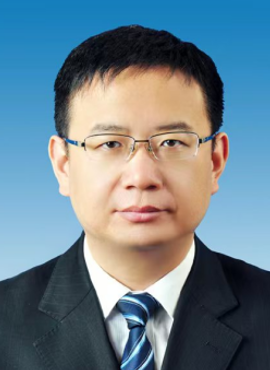
Peng Yang
Senior Engineer, is Dean of the State Grid Hebei Electric Power Research Institute. He has dedicated his career to power system planning and flexible transmission/distribution technology. He has led 30 key provincial-level projects including national science and technology major special projects, with total funding exceeding RMB 230 million. He has received 2 national-level and 10 provincial-level awards, promoted 3 international standards, formulated 4 national/industry standards, and holds 64 patents with 29 SCI/EI papers. He spearheaded the construction of China's first 35kV SiC flexible substation, earning the First Prize of China Electric Power Science and Technology Progress. He innovated a high power-density electromagnetic flexible interconnection solution and a "main grid decision-making–distribution grid hub platform–microgrid regional autonomy" multi-level collaborative control architecture. He serves as a member of three professional technical committees including the Power Industry Power Quality and Flexible Transmission Standardization Technical Committee, Editor-in-Chief of Hebei Electric Power Technology, and Vice Chairman of Hebei Society of Electrical Engineering.
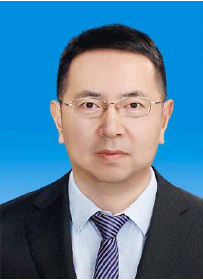
Tao Zheng
Tao Zheng is a professor and doctoral supervisor, Deputy Director of the Institute of Power System Protection and Control, and lead professor of the national-level high-quality course "Power System Relay Protection." He is Vice Chair of the IEEE PES (China) Power System Main Equipment Protection Technical Committee and a founding member of the Protection and Control Technology Committee for New Energy Power Systems of the China Energy Research Society. His research focuses on fault analysis and relay protection of new energy power systems, including wind and photovoltaic generation, ultra-high and extra-high voltage transformers, controllable reactors, flexible DC converters, and AC/DC grids. In the past five years, he has led two National Natural Science Foundation of China projects, two sub-projects of the National Key R&D Program, and more than 20 State Grid science and technology projects. He has published over 200 SCI/EI-indexed papers, obtained more than 40 authorized invention patents, and authored two monographs. He received the Second Prize for Scientific and Technological Progress in China's Power Industry in 2019 and the Third Prize for Scientific and Technological Progress of Ningxia Hui Autonomous Region in 2024.
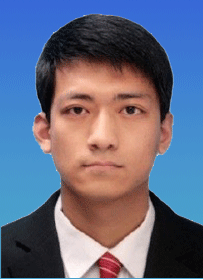
Shuai Wang
He is a senior engineer at the CEPRI, and has been engaged in research related to distribution system operation analysis and control. In recent years, He has undertaken 12 science and technology projects at the headquarters of the State Grid as the project/subject leader, and participated in 3 national major science and technology special projects as the technical backbone. He has published 15 SCI/EI indexed papers, obtained more than 20 authorized/accepted invention patents, participated in the development of 1 IEEE international standard, and won 5 awards at various levels, including the IEEE 2022 SDM Outstanding Contribution Award,Science and Technology Progress Award of the China Electrotechnical Society and the Science and Technology Progress Award of the China Simulation Society.
Shun Liang
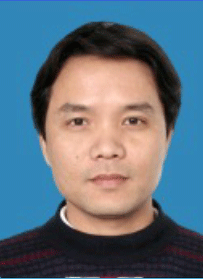
As a Senior Business Expert at the Distribution Division of State Grid Electric Power Research Institute Co., Ltd., he has dedicated years to research in smart distribution networks, distribution automation, and new power systems, focusing on planning, design, and applied technologies. His contributions include participating in Qinghai Province's "13th Five-Year Plan" for distribution networks, as well as formulating plans for Liaoning and Heilongjiang's "14th Five-Year Plan" initiatives. He spearheaded pilot projects like Suzhou's Modern Smart Distribution Network Demonstration and Yangzhou's New Power System Integration Project. His work includes leading State Grid's specialized research on intelligent grid operation control technologies, core equipment development, and smart grid integration projects. To date, he has received nine provincial and ministerial-level science and technology awards.
Session Abstract
With the rapid integration of renewable energy, distributed energy resources, energy storage systems, flexible loads, and microgrids, modern power systems are evolving toward highly coupled transmission-distribution-microgrid architectures. This transition has intensified the spatio-temporal mismatch between generation and demand, increased uncertainty in system operation, and created new challenges for cross-level information sharing, coordinated dispatch, and secure control. Therefore, it is essential to develop advanced coordinated dispatch and control technologies for transmission, distribution, and micro-grid systems.
This special session will focus on key theories, methods, and applications for coordinated dispatch control across transmission, distribution, and micro-grid levels. First, it will discuss cross-level perception and modeling methods, including integrated power flow analysis, distributed energy resource aggregation, and hierarchical state estimation. Second, it will address optimal operation and control strategies under normal operating conditions, covering wide-area power balance, distribution network optimization, microgrid energy management, demand response, and energy storage coordination. Third, it will explore active support and resilience enhancement technologies, including top-down hierarchical dispatch, bottom-up flexibility support, AI-assisted decision-making, and coordinated emergency control.
The session aims to provide a platform for researchers, engineers, and industry experts to exchange recent advances in T-D-M coordinated dispatch and control. It will contribute to improving renewable energy hosting capacity, operational security, power supply reliability, and the low-carbon transformation of smart power and energy systems.