Active-Support Virtual Power Plants: Autonomous Coordination of Source-Load-Storage Resources
Session Chair(s) and Speakers:

Yi Wang
Yi Wang received the B.Eng. and M.Eng. degrees from Tianjin University in 2015 and 2018, respectively, and the Ph.D. degree from Imperial College London in 2022. He subsequently worked as a Research Associate in the Department of Electrical and Electronic Engineering at Imperial College London until 2026. He is currently a Professor at the School of Electrical Engineering and Automation, Wuhan University. His research interests lie in mathematical programming and learning approaches applied to the planning and operation of networked microgrids, the resilience enhancement of future power systems, frequency-constrained power system optimization, and multi-energy system integration. He has published 50 academic papers to date, including 38 SCI-indexed journal articles in prestigious international journals such as IEEE Transactions and Applied Energy.
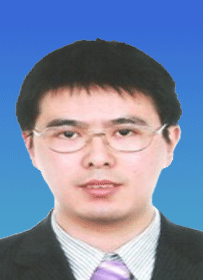
Yonggang Peng
Yonggang Peng is a professor at College of Electrical and Engineering, Zhejiang University and also serves as deputy director of Zhejiang Key Laboratory of Renewable Energy Electrical Technologt and System. His research interests include renewable energy and microgrids, AC/DC hybrid power systems, hydrogen-electricity integrated systems and artificial intelligence technology and applications.

Mingyang Sun
Mingyang Sun received the Ph.D. degree in electrical and electronic engineering from the Department of Electrical and Electronic Engineering, Imperial College London, London, U.K., in 2017. From 2017 to 2019, he was a Research Associate and a DSI Affiliate Fellow with Imperial College London. He is currently a Research Professor with the Department of Industrial Engineering and Management, College of Engineering, Peking University, Beijing, China. He is also an Honorary Lecturer with Imperial College London. His research interests include AI in energy systems and cyber-physical energy system security and control.
Session Abstract
With the increasing penetration of renewable energy sources in modern power systems, virtual power plants (VPPs) are becoming critical platforms for aggregating, coordinating, and controlling distributed energy resources, flexible loads, and energy storage systems. Rather than serving only as passive market aggregators, next-generation VPPs are expected to actively support grid operation through autonomous source-load-storage coordination. This session focuses on advanced modeling, control, coordination, and optimization methods for active-support VPPs. Particular emphasis will be placed on enabling VPPs to provide autonomous support for power balance, frequency regulation, voltage stability, resilience enhancement, market participation, etc. The session will explore how heterogeneous resources within VPPs can be aggregated and controlled under uncertainty, including renewable variability, demand fluctuations, communication delays, cyber-physical risks, and grid disturbances. Topics of interest include distributed and hierarchical VPP control architectures, model predictive control, robust and stochastic optimization, demand response coordination, battery energy management, peer-to-peer energy sharing, and data-driven decision-making for VPP operation. The session also welcomes studies on grid-forming and grid-following inverter coordination within VPPs, active support capability assessment, VPP participation in transmission-distribution coordination, and practical demonstrations of VPP control platforms. By bringing together perspectives from power system operation, control theory, artificial intelligence, and energy markets, this session aims to advance active-support VPPs as flexible, reliable, and intelligent grid-interactive entities for future low-carbon power systems.