Advanced Power Flow Algorithms and Their Applications on Modern Power System
Session Chair(s) and Speakers:
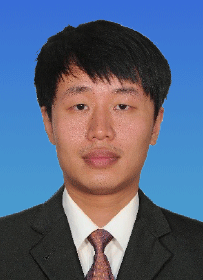
Zhang Yi
Zhang Yi, Male, PhD, Professor and Doctoral Supervisor at Fuzhou University. His main research interests include power quality analysis and control for power systems and industrial users, carbon emission monitoring and tracing, holomorphic embedding power flow algorithms and their applications, as well as power big data applications. He has presided over a number of research projects in related fields, including the General Program of the National Natural Science Foundation of China, Key Guiding Projects of Fujian Province.
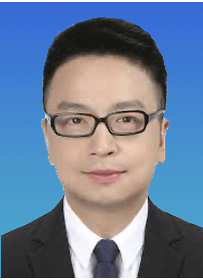
Chengxi Liu
Chengxi Liu is professor with the School of Electrical Engineering and Automation, Wuhan University, China. He also serves as the Vice Director of Department of Power Systems. He is an IEEE and CSEE senior member and an associate member of CIGRE C6 and B5, China Committee. Additionally, he serves as an Associate Editor for the MPCE and CSEE JPES, and some other international journals. He has published over 200 academic papers, including over 60 SCI papers, with h-index 36. with over 4,400 citations. His research interests include power system stability and control, power system dynamic simulations, etc.
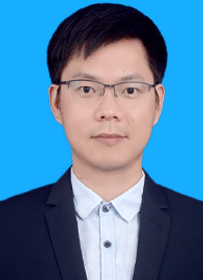
Zonghua Zheng
Zonghua Zheng is with the College of Electrical Engineering and Automation, Fuzhou University. His research interests include power system simulation and modeling, advanced power flow algorithms, and low-carbon power system analysis. His recent work focuses on power system modeling under renewable uncertainty, multi-dimensional holomorphic embedding methods, and carbon emission flow analysis for low-carbon operation.
Session Abstract
Modern power systems are evolving rapidly under the integration of variable renewable energy, distributed resources, power-electronic interfaces, and emerging low-carbon operation requirements. These changes challenge the classical power flow model in several directions: the operating point becomes inherently uncertain, the network is increasingly unbalanced and hybrid AC/DC, and downstream applications such as electricity-carbon market design and risk-aware operation require sensitivities and distributional statistics rather than only point solutions. As a result, "solving the power flow" has expanded into a family of advanced algorithms that target accuracy, scalability, robustness, and reusability, together with a growing range of applications built on top of them.
This session brings together recent advances in advanced power flow solution algorithms and their applications in modern power systems. Topics of interest include, but are not limited to: holomorphic embedding load flow and its multi-dimensional extensions; continuation power flow and voltage-stability margin assessment; probabilistic and interval power flow under renewable uncertainty; three-phase and unbalanced distribution power flow; AC/DC hybrid power flow for systems with HVDC and converter-interfaced resources; data-driven and learning-based power flow surrogates; coupled power flow with carbon emission flow and other physical layers; and applications to dispatch, planning, stability, and electricity-carbon market analysis.
The session provides a forum for researchers and practitioners to exchange methodological developments, share deployment experience on real-system case studies, and discuss open problems on convergence guarantees, scalability to provincial-scale networks, and reusability across operating conditions. Contributions reporting both algorithmic advances and their applications to practical distribution or transmission systems are warmly welcomed.