Edge Aggregation and Coordinated Control Technologies for Distributed Energy Resource Clusters
Session Chair(s) and Speakers:
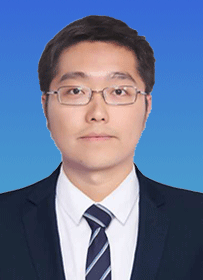
Liu Youbo
Liu Youbo, Professor, doctoral supervisor, provincial candidate for academic leadership, and listed among Stanford University's World's Top 2% Scientists. Participated in one project under the National High-Tech R&D Program ("863 Program"). Served as principal investigator for three major projects of the Ministry of Science and Technology and two projects funded by the National Natural Science Foundation of China (NSFC). Contributed to nine NSFC projects, including international cooperation, general, and key programs, as well as over 80 projects for various electric power enterprises. Led the research and development of nine software/hardware systems, including those for new-type distribution network planning-operation interaction, power system edge intelligence, vehicle-grid integration, and electricity trading decision support. Received three provincial/ministerial-level science and technology progress awards, two second prizes from the China Electrotechnical Society, one second prize each from the State Grid and China Southern Power Grid for science and technology progress, and four first prizes for science and technology progress from provincial power companies such as Guangdong and Sichuan. Published over 130 papers (more than 80 indexed by SCI/EI), holds 27 authorized national invention patents, has authored two monographs, and has led the development of three industry/group standards.

Tang Zhiyuan
Tang Zhiyuan , associate Professor, Master's Supervisor, and Distinguished Talent introduced by Sichuan University. He has long been engaged in research on distributed resource cluster control in distribution networks. In recent years, he has led multiple vertical research projects, including those funded by the National Natural Science Foundation of China (NSFC), sub-tasks of the National Science and Technology Major Project on Smart Grids, the "Open Bidding for Leading Expertise" Major Project of the Sichuan Provincial Department of Science and Technology, and Key R&D Projects of the Sichuan Provincial Department of Science and Technology. He is a recipient of the IEEE PES Outstanding Young Professional Award from the Power System Protection and Control Technical Committee. He has published over 80 papers (more than 50 indexed by SCI/EI) and holds 4 authorized national invention patents.
Session Abstract
The high penetration of distributed energy resources (DERs) introduces strong source-load uncertainty and multi-agent autonomy to distribution networks, challenging the real-time performance, privacy, and scalability of centralized control paradigms. This session focuses on edge aggregation and coordinated control technologies for DER clusters, covering key topics such as edge intelligence, edge-cloud collaboration, cluster partitioning, multi-timescale optimal dispatch, decentralized coordinated control, and trusted interaction. Specific content includes dynamic aggregation modeling of distributed resources, lightweight edge computing architectures, control strategies integrating data-driven and physics-informed models, and flexible DER dispatch under electricity-carbon coupling and market environments. The session aims to provide theoretical foundations and technical pathways for the intelligent operation of new-type distribution systems, foster deep convergence between edge computing and power systems, and support the secure, efficient accommodation and coordinated autonomy of large-scale DERs.