Intelligent Optimization Computation Technology for Source-Load-Storage Resources Addressing Multi-Type Balance Risk Scenarios
Session Chair(s) and Speakers:
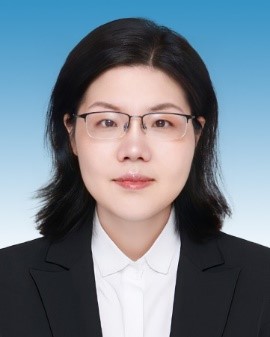
Prof. Yaping Li
Prof. Yaping Li is currently the deputy director of the Optimal Dispatch and Intelligent Decision-making Research Section of China Electric Power Research Institute, and is in charge of the intelligent decision-making direction. She received the B.S. degree from Sichuan University, Chengdu, China, the Ph. D. degree from Hohai University, Nanjing, China, in 2003 and 2017 respectively, all in Power System and its Automation. Her research interests include artificial intelligence technology applied in power dispatching, power system optimal dispatch, "source-grid-load-storage" interactive operation, and demand response. She has been engaged in the field of dispatch automation for nearly 20 years. She has led projects funded by the National Natural Science Foundation of China and the National Science and Technology Major Project on Smart Grid, and participated in nearly 10 major projects such as the National Key Research and Development Program. She has published over 30 high-level SCI/EI indexed papers and won one first prize and four second prizes for scientific and technological progress at the provincial and ministerial levels.

Prof. Min Xia
Prof. Min Xia is a Professor and PhD supervisor at the School of Automation, Nanjing University of Information Science and Technology, China. He received the B.S. degree in Applied Mathematics from Shandong University in 2005 and the Ph.D. degree in Control Theory and Control Engineering from Donghua University in 2009. His research interests include artificial intelligence for energy and power systems, power grid dispatch optimization, distributed photovoltaic monitoring, multi-energy load forecasting, remote sensing image analysis, and graph/deep learning methods for power systems. In the past Five years, he has published more than 100 SCI-indexed papers, including 17 highly cited papers, and has been listed among the World's Top 2% Scientists for three consecutive years. He has undertaken 12 projects funded by the National Natural Science Foundation of China and has received one first prize and four second prizes at provincial/ministerial level or above.

Ying Wang
Ying Wang received the B.S. degree in Electrical Engineering and Automation from Nanjing University of Aeronautics and Astronautics, Nanjing, China, in 2011, and the M.S. and Ph.D. degrees in Control Theory and Control Engineering from Southeast University, Nanjing, China, in 2014 and 2018, respectively. She is currently an Associate Professor with the School of Automation, Southeast University, where she also serves as a Ph.D. and M.S. supervisor. She is a member of Prof. Kaifeng Zhang's research group. From September 2015 to March 2017, she was a visiting Ph.D. student at Argonne National Laboratory, USA, under the CSC joint training program, and from March to April 2017, she was a visiting scholar at the Massachusetts Institute of Technology (MIT), USA. Her research interests include power system scheduling and control, electricity markets, integrated energy systems, and the application of artificial intelligence methods in these areas.
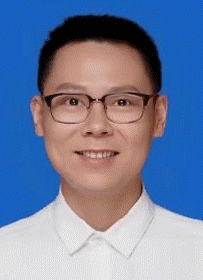
Wenbo Mao
Wenbo Mao is currently employed by China Electric Power Research Institute (CEPRI). His research interests cover optimal power system dispatch and source-grid-load-storage interaction. He holds a Master of Engineering degree and holds the professional title of Associate Senior Engineer. He joined CEPRI in 2012 and was appointed as Distinguished Expert of CEPRI in 2022. In 2025, he became a core member of the State Grid Corporation of China (SGCC) key research team named "Wide-Area Coordinated Dispatch of Multi-resources and High-performance Optimal Solution". He has presided over one headquarters-level science and technology project of SGCC, served as the young chief engineer for one SGCC task-based research project, and acted as the principal investigator for more than ten research subjects. He has also participated in two national key R&D programs. He has been awarded two Second Prizes of Industry Science and Technology Progress Award. As the first author, he has published more than ten EI-indexed papers and been granted 11 invention patents.
Session Abstract
Under abnormal scenarios such as forecast deviations and sudden power fluctuations, the modeling of multi-level coupling constraints for source-load-storage resources is complex, and the combinatorial explosion problem across multiple scenarios is prominent. There is an urgent need to develop power and energy balance decision-making methods and efficient intelligent solution technologies that take into account source-load-storage resources. This special session mainly explores new theories and methods of intelligent optimization computation for multi-type balance risk scenarios, focusing on efficient modeling and dimensionality reduction techniques for complex source-load-storage systems, optimization solution paradigms that deeply integrate artificial intelligence and physical mechanisms, and scalable intelligent decision-making frameworks for practical engineering, aiming to achieve breakthroughs in solution efficiency and robustness for large-scale scheduling problems.
Topics include but are not limited to:
- Modeling and optimization for multi-type balance risk scenarios
- Fast solution algorithms for large-scale scheduling
- Intelligent optimization theories combining AI and mechanisms
- Applications of graph computing and deep reinforcement learning
- Multi-timescale coordinated scheduling
- Distributed resource collaborative decision-making
- Engineering system design and verification